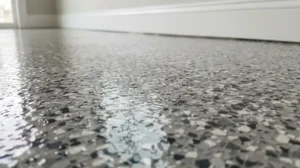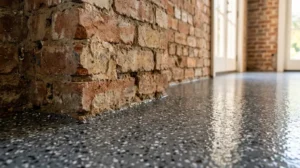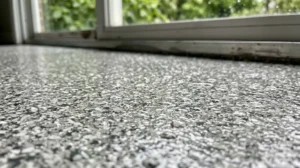
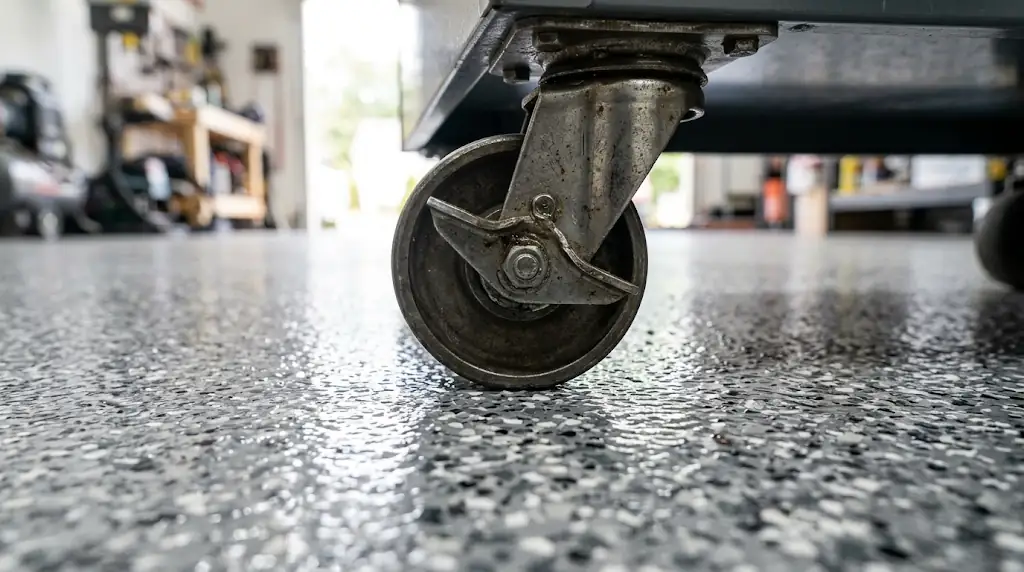
A professionally installed multi-layer epoxy and polyaspartic floor system in Coastal Georgia lasts 15 to 20 or more years without peeling, chipping, or delaminating. In contrast, retail DIY epoxy paint kits fail within 1 to 3 years due to severe subsurface moisture vapor transmission, coarse coastal sand abrasion, and sustained summer heat.
Garage Floor Lifespan by Coating System
Floor longevity is dictated by coating chemistry, dry film thickness (DFT), and mechanical surface preparation. Thin-film coatings break down quickly under regular mechanical traffic, whereas high-solids, multi-coat broadcast systems provide decades of service.
| Floor Coating System | Dry Film Thickness (DFT) | Expected Lifespan in Greater Savannah | Primary Mode of Failure |
| Big-Box Water-Based DIY Kit | 2 – 4 mils | 1 – 3 Years | Hot-tire delamination, moisture blistering |
| Single-Coat 100%-Solids Epoxy | 8 – 12 mils | 5 – 8 Years | Surface scratching, UV chalking at the apron |
| Multi-Coat Flake + Urethane Topcoat | 15 – 20 mils | 10 – 15 Years | Topcoat wear-through, micro-abrasion dulling |
| Industrial Flake + Polyaspartic System | 25 – 35+ mils | 15 – 20+ Years | Gradual loss of high-gloss sheen over decades |
| Commercial Epoxy Mortar System | 125 – 250 mils (1/8″–1/4″) | 25+ Years | Structural slab movement or deep substrate cracking |
4 Coastal Georgia Factors That Shorten Floor Life
Floors installed in Chatham, Bryan, and Effingham counties experience environmental stressors absent in dry, inland climates. Without proper engineering, local climate conditions cut standard coating lifespans in half.
1. Fine Coastal Sand and Quartz Abrasion
Coastal Georgia soil contains high concentrations of fine quartz sand. Vehicles returning from Tybee Island, job sites in Pooler, or boat ramps in Richmond Hill bring abrasive sand particles into the garage.
When tires roll across a floor covered in loose silica, the sand grains act like 80-grit sandpaper under 4,000 pounds of vehicle weight. Systems with soft topcoats scratch immediately, dulling within 18 months. Multi-layer floors sealed with an aliphatic polyaspartic topcoat resist this friction, achieving superior abrasion resistance under ASTM D4060 testing guidelines.
2. High Hydrostatic Pressure and Sub-Slab Moisture
Coastal water tables sit within a few feet of the ground surface across Wilmington Island, Isle of Hope, and low-lying areas of Savannah. Moisture constantly travels upward through the concrete slab via capillary action.
Standard coatings cannot withstand high moisture vapor emission rates (MVER). As vapor pressure accumulates beneath an impermeable resin film, it causes osmotic blistering and adhesive failure. To achieve a 20-year lifespan, coastal concrete requires a dedicated primer tested to withstand at least 20 pounds of moisture pressure per 1,000 square feet under ASTM F1869 testing protocols.
3. High Ambient Humidity and Salt Air
Savannah’s average relative humidity frequently exceeds 75%, per historical climate data from the National Weather Service. Airborne marine salts settle on concrete surfaces and absorb atmospheric water, keeping unprotected slabs damp.
This moisture cycling accelerates chemical degradation in water-based paints. Non-porous industrial epoxy and polyurea systems form an airtight, chemical-resistant shield that prevents salt-induced surface spalling and concrete carbonation.
4. Thermal Shock and Apron UV Degradation
Subtropical summer sun superheats garage aprons and exterior carports. Standard aromatic epoxies lack UV stability; direct sunlight breaks down polymer bonds, turning gray coatings amber and yellowing clear coats within months.
Additionally, parking cars with tires heated to 140°F onto cold or damp slabs causes thermal shock. Without an elastomeric polyaspartic topcoat with a high heat-deflection profile, thermal stress splits rigid coatings from the slab.
The Anatomy of a 20-Year Coastal Floor System
A garage floor coating lasts two decades only when engineered as a sacrificial, multi-tier barrier. Professional installations do not rely on a single layer of paint.
[Clear Aliphatic Polyaspartic Wear Coat: 8–10 Mils] (Resists heat, UV, scratches)
                  ▲
[Full-Broadcast Vinyl Flake Media: High Impact Mass] (Camouflages wear, adds thickness)
                  ▲
[100%-Solids Epoxy Moisture-Barrier Base: 12–15 Mils] (Deep mechanical anchor)
                  ▲
[Diamond-Ground Concrete Substrate: ICRI CSP 2–3 Profile]
- Step 1: Mechanical Profiling: The concrete is mechanically ground with diamond tooling to open pores and establish a Concrete Surface Profile (CSP) of 2 to 3, as specified by the International Concrete Repair Institute. Acid washing is never used because it leaves chemical salts and introduces water into the slab.
- Step 2: Deep-Penetrating Moisture Vapor Barrier: A 100%-solids epoxy base coat is applied. It penetrates deeply into open capillary channels, bonding to the concrete matrix with over 400 psi of tensile pull-off strength.
- Step 3: Dense Flake Broadcast: Color vinyl flakes are cast into the wet base until rejection (full saturation). This creates a durable aggregate layer that absorbs mechanical point loads and prevents impact gouges from dropped tools.
- Step 4: Cross-Linked Polyaspartic Shield: A high-build clear polyaspartic coat seals the flakes into an impervious shell. It withstands tire friction, brake fluid spills, road grime, and direct sunlight along the door threshold.
How to Maintain an Epoxy Floor to Ensure Maximum Longevity
Epoxy floors do not require waxing or buffing, but basic maintenance prevents premature surface wear in sandy coastal environments:
- Weekly Dry Mopping: Use a microfiber dust mop to sweep out loose sand, shells, and gravel brought in by tires. Keeping quartz grit off the floor eliminates abrasive micro-scratches.
- Rinse Salt Grime: Rinse the floor with clean water every few months to remove coastal road salt and mud.
- Use pH-Neutral Cleaners: Clean spills with pH-neutral multi-surface cleaners or mild dish soap mixed with warm water. Never use citrus-based solvents, bleach, or high-acid cleaners, which etch protective clear coats over time.
- Recoat the Topcoat at Year 12 to 15: A significant benefit of high-solids installations is renewability. If traffic lanes dull after a decade of hard use, technicians can lightly abrade the surface and apply a single fresh polyaspartic clear coat. This restores the factory finish without the expense of stripping the entire floor back to bare concrete.
Real-World Expectations Across Greater Savannah
Site usage determines wear patterns across local municipalities:
- Pooler & Bloomingdale Commuters: Daily commuter traffic on I-95 and I-16 exposes floors to high tire heat. Full flake systems protect against tire wear patterns, keeping residential slabs intact for 15+ years.
- Wilmington Island & Isle of Hope Waterfront Homes: Golf carts, boats, and sandy water equipment demand heavy moisture defense. Moisture-barrier bases prevent bottom-up water delamination, outlasting paint alternatives by decades.
- Rincon & Richmond Hill Workshops: Heavy foot traffic, woodworking, lawnmowers, and chemical storage require high impact resistance. Multi-layer broadcast systems resist chemical gouging and oil stains indefinitely.
Invest in a Floor Engineered to Last in Greater Savannah
Buying cheap DIY paint kits leads to peeling floors that require expensive chemical stripping and mechanical repair within two years. A properly specified, diamond-ground multi-layer epoxy system from Savannah Epoxy Flooring withstands Coastal Georgia’s humidity, sand, and heat for 15 to 20+ years.
To evaluate your concrete slab and receive a comprehensive, transparent project estimate, visit our contact page to schedule a site consultation with Savannah Epoxy Flooring.