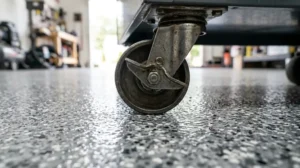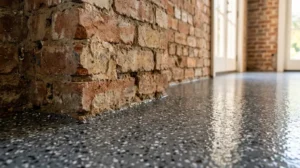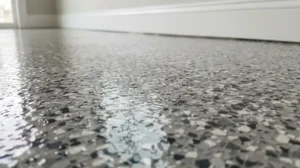
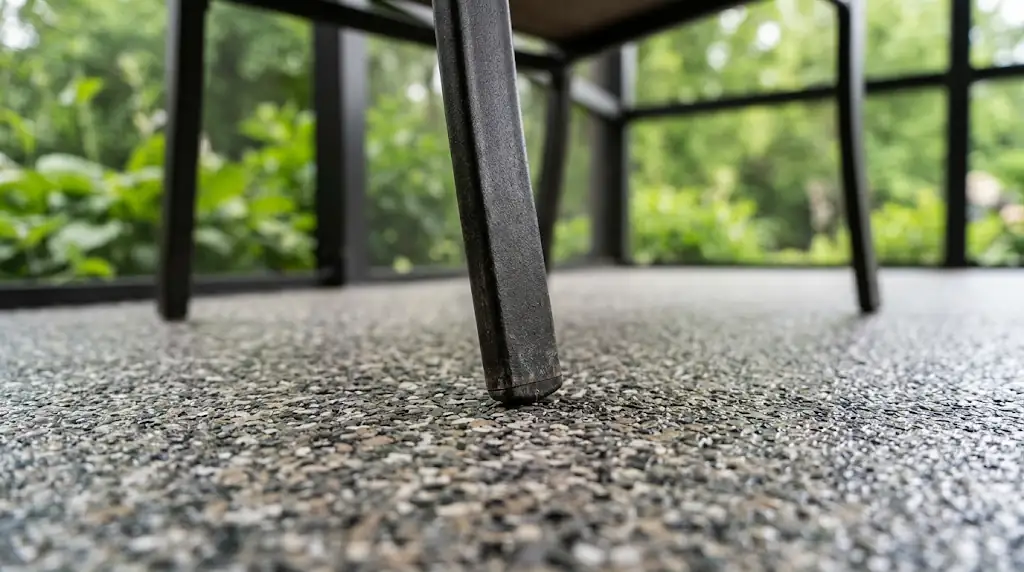
Smooth, untextured epoxy is slippery when wet, but professional patio and screened porch installations are engineered with embedded traction additives to prevent slipping. By broadcasting aluminum oxide, micronized polymer beads, or full vinyl flake aggregates into the resin, coastal installations achieve a wet Dynamic Coefficient of Friction (DCOF) exceeding 0.50, meeting and exceeding national safety standards for exterior wet walking surfaces.
Slip Resistance Standards: Measuring Traction (DCOF)
Slip resistance is determined through empirical laboratory and field measurements rather than visual appearance. The flooring industry relies on the Dynamic Coefficient of Friction (DCOF), governed by standard testing methods published by the American National Standards Institute (ANSI) and evaluated by organizations like the National Floor Safety Institute (NFSI).
Under the ANSI A326.3 standard (Standard Test Method for Measuring Dynamic Coefficient of Friction of Hard Surface Flooring Materials):
- Standard Dry Interior Baseline: A minimum wet DCOF rating of 0.42 is required for level interior spaces expected to get wet.
- Exterior Walkways & Ramps: Wet exterior transit areas subject to wind-driven rain and organic matter require a wet DCOF of 0.55 to 0.60+.
- Smooth Epoxy Without Additives: Wet, untextured high-gloss epoxy drops to a DCOF of 0.25 to 0.35, creating a serious slip-and-fall hazard when wet.
- Textured Epoxy / Polyaspartic with Aggregates: Achieving an orange-peel or sandpaper mechanical profile raises the wet DCOF to 0.50 – 0.65, providing dependable slip resistance even under standing water.
Why Covered Patios and Screened Porches Stay Wet in Coastal Georgia
Screened porches, open lanais, and covered patios in Greater Savannah are constantly exposed to atmospheric moisture. Even without direct roof leaks, concrete slabs in Chatham, Bryan, and Effingham counties experience daily wetting cycles due to regional climate characteristics.
1. Blowing Rains and Subtropical Storms
Savannah averages approximately 49 inches of rainfall annually, according to data from the National Weather Service. During afternoon thunderstorms and coastal tropical systems, high winds blow rain directly through porch screening and across covered patio perimeters, wetting the floor several feet past roof overhangs.
2. Condensation and “Sweating Slab Syndrome”
In non-climate-controlled spaces, high ambient relative humidity (frequently 75% to 90% during coastal Georgia summers) triggers surface condensation. When humid marine air hits a cool concrete slab resting on damp ground, water condenses directly onto the surface film. Without mechanical aggregate in the coating, this moisture creates a thin hydrodynamic film beneath shoes.
3. Tracked-In Water, Sand, and Marsh Mud
Homes along tidal waterways—such as Wilmington Island, Isle of Hope, and coastal Richmond Hill—experience frequent traffic from dock trips, boating, and swimming pools. Wet footprints, salt film, and slick pluff mud tracked onto a completely smooth resin floor reduce surface friction to near-zero.
Anti-Slip Additives: How Traction Is Engineered
Professional installers do not leave patio traction to chance. During the application of the intermediate base coat or the final protective clear coat, technicians incorporate specific mechanical grit media tailored to the space’s footwear requirements.
| Anti-Slip Additive | Material Composition | Grit Size (Mesh) | Barefoot Comfort | Wet Slip Resistance | Ideal Application |
| Micronized Polymer Beads | Polypropylene / Polyethylene spheres | 50 – 100 Mesh | High (Gentle on feet) | Medium (DCOF ~0.45 – 0.52) | Screened porches, residential lanais |
| Full-Broadcast Vinyl Flake | Polyvinyl acetate chip blend | 1/4″ or 1/8″ flakes | High (Orange-peel feel) | High (DCOF ~0.50 – 0.58) | Garages, covered patios, utility slabs |
| White Aluminum Oxide | Fused crystalline corundum | 24 – 70 Mesh | Low (Sharp, abrasive) | Extreme (DCOF ~0.60 – 0.70+) | Outdoor ramps, commercial steps, docks |
| Fine Quartz / Silica Sand | Round or sub-angular silica | 30 – 50 Mesh | Moderate (Rough texture) | High (DCOF ~0.55 – 0.62) | Pool surrounds, heavy-washdown patios |
Micronized Polymer Beads for Barefoot Screened Porches
For spaces where homeowners frequently walk barefoot or have young children and pets, aluminum oxide is often too abrasive. Installers mix clear micronized polypropylene beads into the topcoat. Because these particles are rounded, they disrupt the water tension and provide grip under rubber-soled shoes without scratching bare skin.
Full-Broadcast Vinyl Flake Systems
A standard multi-layer flake installation inherently provides mechanical traction. When color vinyl chips are broadcast to complete rejection (covering 100% of the wet epoxy base), they create an irregular, textured surface profile. When sealed with two thin coats of clear topcoat, the final floor maintains a subtle, pebble-textured “orange-peel” finish that resists slipping while remaining comfortable to walk on without shoes.
The Critical Exterior Rule: UV Stability for Porches and Patios
While slip resistance is critical, choosing the correct chemical resin for an exterior porch is equally important. Standard aromatic epoxy must never serve as the topcoat on an exterior patio or screened porch.
Epoxy resins break down under ultraviolet (UV) radiation. Even under covered porches, indirect solar rays and morning glare degrade standard epoxy, turning clear coats milky yellow and causing the surface to chalk, crumble, and lose its aggregate bond within 12 months.
To ensure long-term durability, exterior patio systems require a hybrid formulation:
- Base Layer: Deep-penetrating 100%-solids moisture-vapor barrier epoxy to bond with the damp concrete slab.
- Traction / Broadcast Layer: Decorative vinyl flakes or colored quartz aggregate.
- Topcoat: 100% UV-stable aliphatic polyaspartic clear coat embedded with traction additives. Polyaspartic chemistry will not amber, chalk, or peel under direct southern sunlight, locking the anti-slip particles permanently into place.
Cleaning and Maintaining a Textured Exterior Floor
A common concern with textured coatings is cleanability. Aggressive non-skid floors can trap mop strings and hold coastal dirt.
To maintain slip resistance without making cleaning difficult:
- Avoid String Mops: Traditional cotton string mops shred on textured aggregate floors. Use a soft-bristle deck broom or a flat microfiber mop pad.
- Rinse with a Garden Hose: Outdoor screened porches and lanais coated in polyaspartic systems can be sprayed clean with a standard garden hose and directed toward patio drains or outer edges using a rubber squeegee.
- Use Mild Degreasers: Pollen, coastal tree sap, and marsh silt rinse away cleanly using warm water mixed with a pH-neutral cleaner or mild biodegradable dish detergent. Harsh acids or solvents should never be used, as they can degrade the polymer grip additive.
Site-Specific Recommendations Across Greater Savannah
- Wilmington Island & Isle of Hope Screened Lanais: Proximity to salt creeks means frequent moisture from dew and dock traffic. A full-broadcast flake system with an aliphatic polyaspartic topcoat and 50-mesh polymer beads balances easy cleaning with safe, barefoot-friendly traction.
- Pooler & Bloomingdale Master-Planned Patios: Concrete patios in newer developments often sit in direct sun. A polyaspartic system with embedded fine aluminum oxide ensures the surface resists UV rays, furniture dragging, and wet foot traffic from backyards.
- Rincon & Richmond Hill Covered Work/Storage Porches: Covered slabs holding lawn equipment, ATVs, or outdoor kitchens require coarse quartz or 36-mesh aluminum oxide to provide maximum grip against wet grass clippings, oil drips, and rain blowing off open fields.
Upgrade Your Outdoor Living Space with Safe, Non-Slip Coatings
You do not have to choose between a glossy, decorative outdoor floor and safety. By incorporating calibrated traction additives into an industrial, UV-stable polyaspartic system, Savannah Epoxy Flooring delivers durable, stain-resistant outdoor living surfaces engineered for coastal weather.
To discuss traction options, inspect aggregate samples, and receive a line-item estimate for your patio or porch in Greater Savannah, visit our contact page to schedule an on-site consultation with Savannah Epoxy Flooring.